
Posted on 26 June 2026
Author: Maisy owens
Last updated on 26 June 2026
Choosing Between Easyfit Core, Remote, and Pro
This guide explains the differences between Easyfit Core, Remote, and Pro, helping UK homeowners, landscapers and trade buyers choose the right connectable outdoor lighting system for their garden size, control preference and future plans.
Understand What “Connectable Outdoor Lighting” Really Means
The phrase connectable outdoor lighting is often used broadly, but in practice it describes two very different types of systems.
Understanding the difference helps you avoid buying a setup that looks expandable but quickly reaches its limits.
Daisy-Chain Decorative Systems
These include festoon lights, fairy lights and string lighting. Each set plugs into the next, extending the total length.
They’re designed for ambience rather than landscape design. Expansion simply means adding more cable length rather than introducing different types of fittings.
These systems work well for pergolas, garden parties and seasonal decoration.
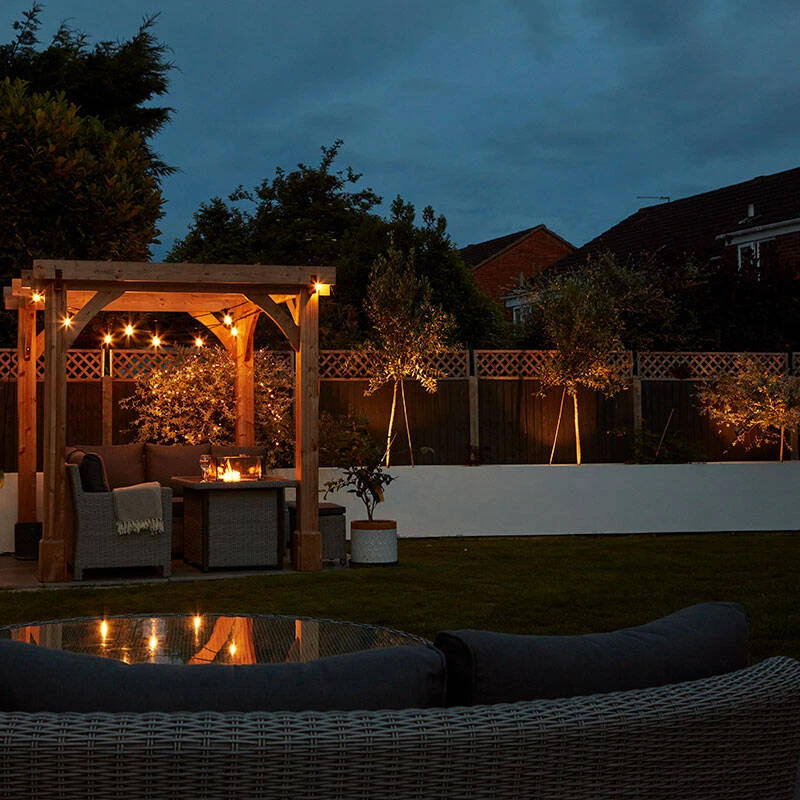
Modular Low-Voltage Landscape Systems
Modular systems allow you to build a structured lighting network using different fittings such as:
- Spotlights
- Bollards
- Deck lights
- Wall lights
Instead of extending a single line of lights, you create multiple lighting zones around your garden.
Cables run through borders, pathways and patios, with fittings branching off at connection points. Because each fitting draws a defined wattage load, the system can expand over time as long as the transformer has spare capacity.
Easyfit systems operate within this modular landscape category.
Why Low-Voltage Lighting Matters
Easyfit systems run at 12V or 24V, which fall within low voltage categories commonly used for garden lighting.
Compared with mains-voltage installations, low-voltage systems offer several advantages:
- Reduced electric shock risk
- Easier installation around soil, planting beds and decking
- Plug-and-play connectors instead of complex wiring
- Greater suitability for DIY installation
The difference between 12V and 24V is primarily about performance.
- 12V systems suit smaller and medium gardens with shorter cable runs.
- 24V systems maintain brightness more effectively across longer distances.
That difference becomes important when selecting between Easyfit ranges.
Map the Easyfit Ecosystem Before Choosing a Range
Easyfit isn’t a single product, but a system made up of several components. Each plays a role in how expandable and reliable the installation will be.
| Component | Role | Planning Impact |
| Transformer / driver | Converts mains power to low voltage | Determines maximum system capacity |
| Main cable | Distributes power around the garden | Longer runs can affect voltage |
| Light fittings | Consume power | Total wattage determines transformer size |
| Connectors / splitters | Allow branching points | Enable layout flexibility |
| Control devices | Timers, sensors or remotes | Control when lights operate |
Expansion problems typically occur when one of these components-usually the transformer- is undersized.
Why Wattage Planning Matters
Every light uses a small amount of power. The total load must stay below the transformer’s maximum rating.
Example:
- 6 spotlights × 5W = 30W
- 4 deck lights × 3W = 12W
- Total = 42W
If the transformer is rated at 45W, the system has virtually no room to expand.
A better approach is to add 20–30% headroom.
In this case:
- 42W load
- +25% margin ≈ 52W
Choosing a 60W transformer would allow additional fittings later.
Compatibility Rules to Understand
Before choosing a range, remember these key rules:
Voltage systems cannot be mixed
12V and 24V components must remain separate.
Drivers and transformers are range-specific
A 24V driver cannot power 12V fittings.
Control systems differ
Remote receivers and automation transformers operate differently.
Wattage limits are absolute
Exceeding transformer capacity can cause failures or protection shutdown.
Understanding these basics makes choosing the right system much easier.
Choose Easyfit Core for Flexible 12V Infrastructure
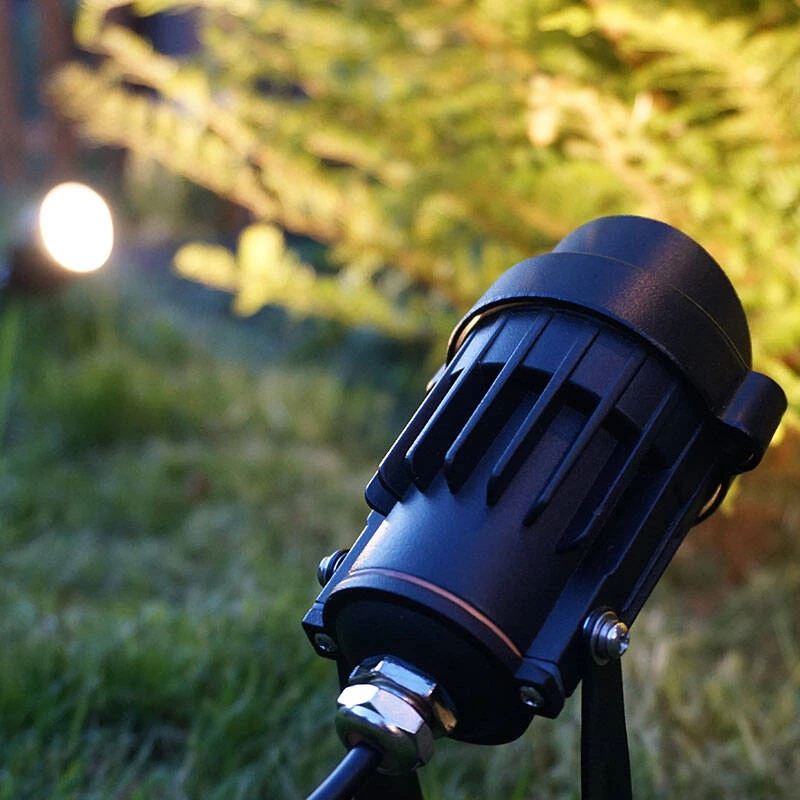
Easyfit Core is the most flexible option within the range. It provides a modular 12V platform designed for expansion rather than advanced control features.
Who Core Is For
Core suits:
- DIY-confident homeowners
- Medium-sized gardens
- Projects built in phases over several seasons
- Buyers who prefer automated lighting rather than remote control
If you want infrastructure first and features later, Core is usually the best starting point.
Transformer Options
Core systems typically use transformers such as:
- 22W – small starter setups
- 60W – medium gardens with layered lighting
- 150W – larger domestic installations
Correct sizing ensures the system can grow without replacing the power supply.
Automation Options
Core works well with automated control devices including:
- Dusk-to-dawn sensors
- Mechanical or digital timers
- PIR motion sensors
This allows lights to turn on automatically at sunset and switch off later in the evening without manual control.
Typical Core Layouts
Core performs particularly well in structured domestic gardens such as:
- Pathways with evenly spaced bollards
- Borders highlighting shrubs or small trees
- Patio perimeter lighting
- Deck or step illumination
Because fittings connect to a main cable, additional lights can be added later if spare capacity exists.
Expansion Example
Initial installation:
- 4 spotlights × 5W = 20W
- 60W transformer
Remaining capacity = 40W
Later addition:
- 6 deck lights × 3W = 18W
Total load becomes 38W, still comfortably within the transformer’s limit. The system expands without replacing existing components.
Choose Easyfit Remote for Instant Lighting Control
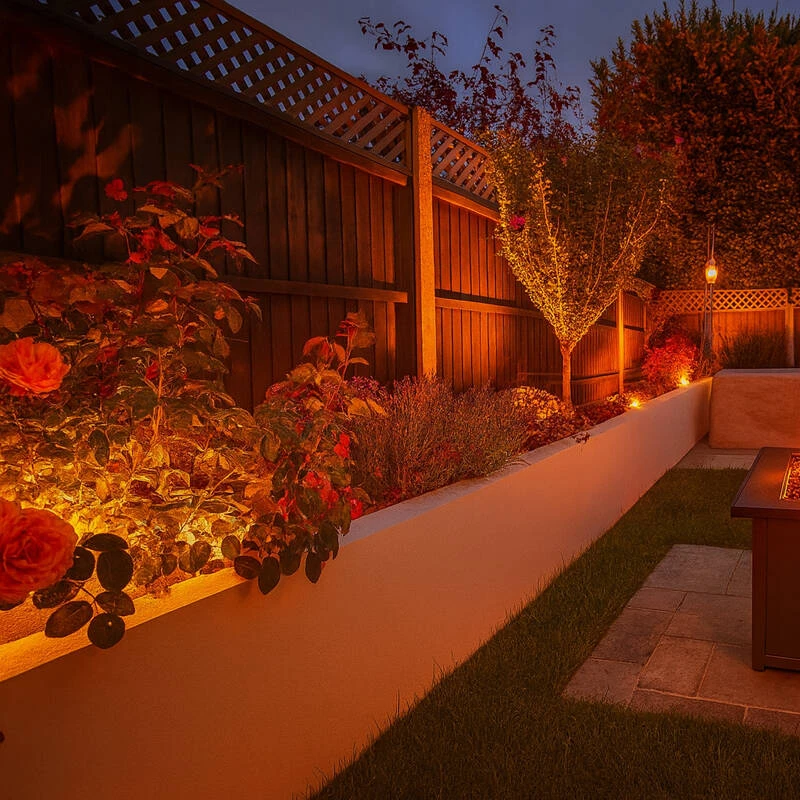
Easyfit Remote focuses on atmosphere and convenience. Instead of relying on timers or sensors, you control the lights directly using a remote handset.
Who Remote Is For
Remote is ideal for:
- Homeowners who entertain regularly
- Patio-focused garden layouts
- Buyers who want adjustable lighting levels
- Users who prefer simple handheld control
If your garden revolves around dining areas or seating zones, Remote offers more control over the mood of the space.
Remote Control Features
Depending on the fittings used, Remote systems can allow:
- On/off switching
- Brightness dimming
- Adjustable colour temperature
Dimming lets you reduce brightness for evening ambience without changing wiring.
For example:
- Bright lighting for early evening gatherings
- Medium brightness for dining
- Low lighting for late-night atmosphere
Pairing and Compatibility
Remote systems require compatible receivers.
Typical setup involves:
- Powering the lighting system by connecting all the lights, accessories, the remote receiver followed by the transformer and plugging into power.
- Activate pairing mode by holding down the power button on the remote for 30 seconds.
- The lights will start flashing; the lights are paired once the lights stop flashing and stay on.
- You can now control your lights from the remote.
Receivers are designed specifically for Remote fittings, so compatibility between ranges is limited.
Automation Differences
Remote systems are designed for manual control rather than automated schedules.
Because of this, they typically do not integrate with dusk-to-dawn transformers in the same way as Core systems.
If automatic switching is essential, Core is usually the better choice.
Choose Easyfit Pro for Power and Long Cable Runs
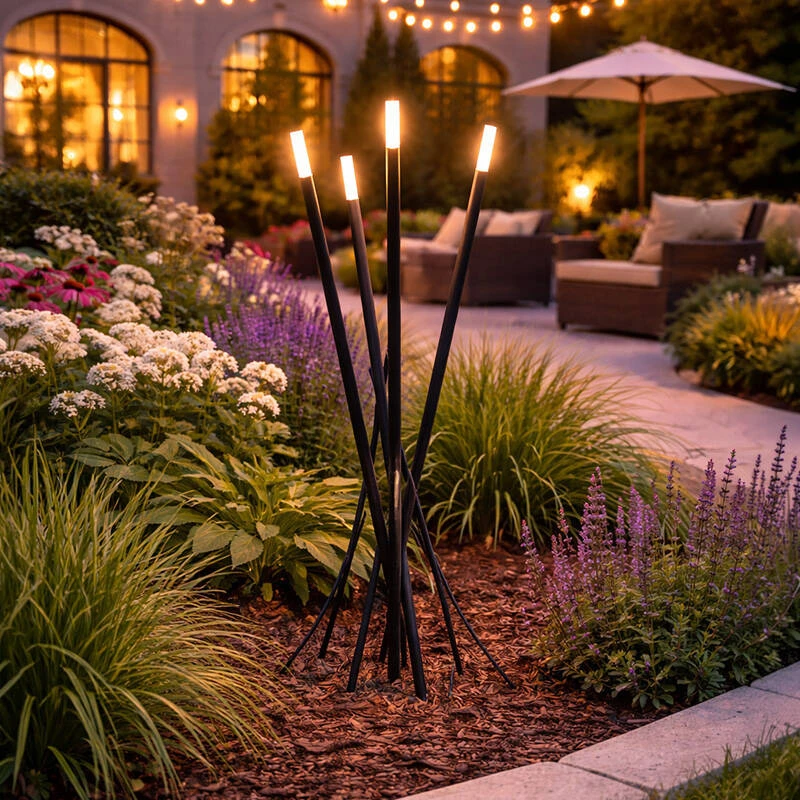
Easyfit Pro is designed for larger installations where electrical performance matters more than control features. Operating at 24V, it maintains consistent brightness across longer cable distances.
Who Pro Is For
Pro suits:
- Large domestic gardens
- Long pathways or driveways
- Multi-zone landscape lighting
- Professional landscapers or trade installations
If cable runs exceed typical domestic distances, Pro becomes the most practical choice.
Why 24V Improves Long-Distance Performance
Voltage drop occurs naturally as electricity travels through cables. The longer the cable and the higher the load, the greater the loss.
Because Pro operates at 24V rather than 12V, the proportional impact of that loss is smaller.
This means lights at the far end of the cable remain closer in brightness to those near the driver.
For gardens with runs exceeding 20–25 metres, this difference becomes noticeable.
Driver Options
Typical Pro drivers include:
- 24W – small feature zones
- 60W – medium layouts
- 90W – larger installations
As with any electrical system, drivers should be sized with at least 20–30% headroom to maintain efficiency and reliability.
Environmental Protection
Pro fittings often carry IP65 ratings, while drivers frequently reach IP67 protection.
This higher protection level is useful when:
- Drivers sit near ground level
- Connectors are close to soil
- Installations face heavy rainfall
Higher ratings increase resilience in demanding outdoor environments.
Example Installation
Consider lighting a 25-metre pathway with:
- 10 bollards × 4W = 40W
- 4 spotlights × 6W = 24W
Total load = 64W
A 90W Pro driver leaves spare capacity while maintaining brightness consistency across the entire run.
For long gardens, this makes Pro technically advantageous.
Core vs Remote vs Pro: Side-by-Side Comparison
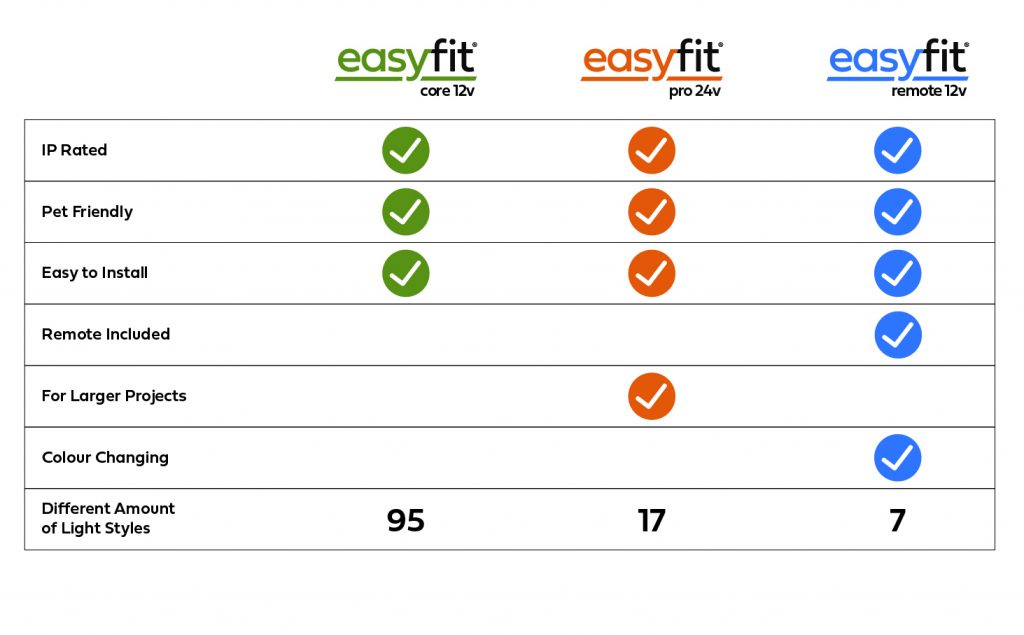
The three Easyfit ranges differ primarily in voltage strategy, control style and expansion potential.
Common Buyer Questions
Do I Need an Electrician?
Usually not for the low-voltage lighting side.
Easyfit systems run at 12V or 24V, allowing plug-and-play installation of cables and fittings. However, the 230V mains socket supplying the transformer must be safely installed and compliant with UK wiring regulations.
Can I Mix Easyfit Ranges?
No.
Core and Remote operate at 12V, while Pro operates at 24V. Mixing these systems can damage components.
Each range should remain within its own voltage ecosystem.
How Many Lights Can One Transformer Support?
The number of lights depends on total wattage rather than quantity.
Example:
- 8 lights × 5W = 40W
- Add 25% headroom = 50W
A 60W transformer would be suitable.
What IP Rating Is Recommended?
For most exposed UK gardens:
- IP44 – sheltered locations
- IP65 – exposed fittings
- IP67 – drivers near ground level
Higher ratings improve protection against rain and dirt.
Can I Expand Later?
Yes, provided two conditions are met:
- Spare transformer or driver capacity
- Available connector points on the cable
If capacity is already near the limit, expansion may require a larger transformer or a second circuit.
Planning headroom at installation stage makes future upgrades much easier.
| Feature | Core | Remote | Pro |
| Voltage | 12V | 12V | 24V |
| Control | Timer / sensor automation | Remote dimming | Driver-based infrastructure |
| Expansion | High with correct transformer sizing | Moderate | Very high |
| Cable runs | Short to medium | Short to medium | Medium to long |
| Typical IP rating | IP44–IP65 | IP65 | IP65 fittings / IP67 drivers |
| Best for | Flexible domestic installs | Entertaining spaces | Large gardens or trade installs |